Travel Destination Marketing Ideas: 30+ Strategies to Attract Visitors in 2026
Alex Zhang is the founder of NeoSpark, an AI-powered design platform helping creators and teams generate images, videos, and brand assets without design skills.
Travel Destination Marketing Ideas: 30+ Strategies to Attract Visitors in 2026
Published: May 7, 2026 | Reading Time: 14 min | Level: DMO / Tourism Board / Hotel Marketer
TL;DR: Destination marketing in 2026 demands visual-first, AI-powered strategies that turn passive viewers into active travelers. This guide covers 30+ proven tactics including Instagram-worthy spot creation, UGC campaigns, drone videography, seasonal campaigns, and AI-driven content workflows �� helping DMOs and tourism boards increase visitor numbers while reducing marketing costs by up to 70%.
Table of Contents
- The State of Destination Marketing in 2026
- Visual-First Marketing Strategies
- Seasonal Campaign Ideas
- Multi-Channel Content Strategy
- AI-Powered Destination Marketing with NeoSpark
- Content Repurposing Framework
- Measuring Destination Marketing ROI
- Destination Marketing Case Studies
- FAQ
- Conclusion
The State of Destination Marketing in 2026
The Post-Pandemic Travel Renaissance
The travel industry has entered a new golden age. Global tourism arrivals reached 1.6 billion in 2025, surpassing pre-pandemic levels, and 2026 projections indicate continued growth at 8-12% annually. However, the marketing landscape has fundamentally shifted:
| Marketing Shift | 2020-2023 | 2024-2026 |
|---|---|---|
| Primary Discovery Channel | Search engines | Social media (TikTok, Instagram) |
| Content Format | Static images + text | Short-form video + interactive |
| Booking Window | 60-90 days | 7-30 days (spontaneous travel) |
| Audience Trust | Brand advertising | Peer recommendations / UGC |
| Budget Allocation | 60% paid ads, 40% organic | 40% paid ads, 60% content & community |
| Decision Driver | Price + convenience | Experience + shareability |
Key Statistics for Destination Marketers
| Metric | Data Point | Source |
|---|---|---|
| Travelers inspired by social media | 76% | Expedia Group 2025 |
| TikTok travel content views | 180 billion annually | TikTok Travel Report 2025 |
| Bookings influenced by UGC | 52% | Stackla Consumer Report |
| Travelers who research on mobile | 82% | Google Travel Insights |
| Average content pieces before booking | 32 touchpoints | Skift Research 2025 |
| Destinations using AI in marketing | 43% (up from 12% in 2023) | NeoSpark Tourism Survey 2026 |
The implication is clear: Destinations that master visual storytelling, user-generated content, and AI-powered content creation will capture disproportionate visitor share. Those relying on traditional brochure-style marketing will be left behind.
Visual-First Marketing Strategies
In 2026, visual content is not a nice-to-have �� it is the primary driver of destination discovery and booking decisions. Here are five proven visual-first strategies that top-performing DMOs use to dominate traveler attention.
Instagram-Worthy Spot Creation
The most powerful marketing asset a destination can create is a location so visually stunning that visitors cannot resist sharing it. These “Instagrammable” spots become organic marketing engines.
How to create shareable destination spots:
- Identify natural advantages: Waterfalls, viewpoints, street art districts, architectural landmarks, unique natural formations
- Enhance with design: Add photo frames, colorful murals, scenic overlooks, lighting installations, or reflective surfaces
- Optimize for the shot: Ensure good lighting angles, clear sightlines, and space for posing
- Make it findable: Create dedicated hashtags, geotags, and signage directing visitors to the spot
- Refresh regularly: Update installations seasonally to give repeat visitors new content to share
Examples of engineered viral spots:
- The “I Amsterdam” letters (before removal) generated 1.2M+ tagged posts
- Singapore’s Supertree Grove at Gardens by the Bay: 3M+ Instagram posts
- The Pink Wall in Los Angeles: 50,000+ posts, driving foot traffic to a previously unknown alley
Pro Tip: Use NeoSpark’s AI Poster Generator to create visual mockups of potential installations before investing in physical construction.
User-Generated Content (UGC) Campaigns
UGC is the most trusted form of destination marketing. Travelers believe other travelers 12x more than brand advertising.
UGC campaign framework:
| Campaign Element | Implementation | Expected Result |
|---|---|---|
| Branded hashtag | Create a unique, memorable hashtag (#Visit[Destination]2026) | Content aggregation and community building |
| Photo contests | Monthly contests with prizes (free stays, experiences) | 3-5x increase in tagged content |
| Ambassador program | Recruit 20-50 micro-influencers as destination ambassadors | Consistent content stream from diverse perspectives |
| Visitor spotlights | Feature visitor photos on official channels daily | Increased engagement and repeat sharing |
| Review incentives | Encourage reviews with small perks (coffee, discounts) | Improved TripAdvisor / Google rankings |
| Story takeovers | Let visitors “take over” Instagram Stories for a day | Authentic behind-the-scenes content |
UGC best practices:
- Always request permission before reposting visitor content
- Credit the original creator prominently
- Create a content licensing agreement for ambassador programs
- Respond to every piece of UGC with engagement (like, comment, share)
- Display UGC on your website using widgets like Stackla or TINT
Drone Videography
Drone footage has become the gold standard for destination marketing. Aerial perspectives reveal the scale and beauty of a destination in ways ground-level photography cannot match.
Drone content strategy:
- Hero destination film: 2-3 minute cinematic showcase with music (for website hero, YouTube, paid social)
- Seasonal aerial series: 30-60 second clips highlighting each season’s unique appeal
- Activity-specific footage: Drone shots of hiking trails, beaches, ski slopes, city centers
- Behind-the-scenes: Drone footage of events, festivals, and daily life
- 360 aerial panoramas: Interactive drone panoramas for immersive web experiences
Drone content distribution:
| Platform | Format | Length | Use Case |
|---|---|---|---|
| YouTube | 4K cinematic | 2-3 minutes | SEO discovery, pre-trip inspiration |
| Instagram Reels | Vertical 9:16 | 15-30 seconds | Feed discovery, saves, shares |
| TikTok | Vertical with trending audio | 15-60 seconds | Viral potential, younger demographics |
| Website hero | Looping background | 10-15 seconds | Immediate visual impact |
| Trade shows | Silent loop | 1-2 minutes | B2B partner and media engagement |
| OTT/Connected TV | 15-30 second spots | 15-30 seconds | Retargeting website visitors |
Budget Tip: If drone licensing is prohibitive, partner with local drone photographers or use NeoSpark’s AI Image Generator to create stunning aerial-style visuals from reference photos.
360 Virtual Tours
Virtual tours bridge the gap between online research and booking commitment. They allow potential visitors to “experience” your destination before they arrive.
Virtual tour applications:
- Hotel and accommodation previews: 360 room tours increase booking confidence
- Attraction previews: Museums, parks, landmarks, and activity venues
- Event venue showcases: Conference centers, wedding venues, festival grounds
- Neighborhood walks: Street-level exploration of key districts
- Hiking trail previews: Route visualization for outdoor destinations
Implementation approach:
- Phase 1: Google Street View-style coverage of top 10 attractions
- Phase 2: Matterport or similar 360 tours for hotels and indoor venues
- Phase 3: VR-ready experiences for trade shows and travel agent training
- Phase 4: AR overlays showing historical or seasonal variations
ROI data: Destinations with comprehensive virtual tours see 25-40% higher booking conversion rates and 30% reduction in post-booking cancellations.
Influencer Partnerships
Strategic influencer partnerships remain one of the highest-ROI tactics in destination marketing �� when executed correctly.
2026 influencer partnership model:
| Tier | Follower Count | Cost Range | Best For |
|---|---|---|---|
| Nano | 1K-10K | $100-500 | Authentic local stories, niche communities |
| Micro | 10K-100K | $500-3,000 | High engagement, specific demographics |
| Mid | 100K-500K | $3,000-15,000 | Broad reach with maintained engagement |
| Macro | 500K-1M | $15,000-50,000 | Mass awareness campaigns |
| Mega | 1M+ | $50,000+ | Major campaign launches, global reach |
The shift to micro and nano influencers:
DMOs are increasingly favoring 20 micro-influencers over 1 mega-influencer. The reasons:
- 4x higher engagement rates on micro-influencer content
- Lower cost per impression and cost per engagement
- More authentic content that feels like peer recommendations
- Diverse audience reach across different demographics and interests
- Local authenticity �� micro-influencers often have deeper local knowledge
Influencer campaign structure:
- Discovery phase: Identify 30-50 potential partners using tools like Upfluence or Aspire
- Vetting phase: Analyze engagement rate, audience demographics, content quality, and brand alignment
- Briefing phase: Provide creative guidelines while allowing creative freedom
- Content phase: 3-5 posts/stories over 2-4 weeks with required hashtags and tags
- Amplification phase: Boost top-performing content with paid social ads
- Measurement phase: Track reach, engagement, website traffic, and attributed bookings
Seasonal Campaign Ideas
Smart destination marketers plan their campaigns around seasonal opportunities. Here is a month-by-month framework to keep your destination top-of-mind year-round.
| Month | Campaign Theme | Content Focus | Target Audience |
|---|---|---|---|
| January | New Year, New Adventures | Resolution travel, wellness retreats, bucket list destinations | Millennials, wellness travelers |
| February | Romantic Escapes | Couple getaways, Valentine's packages, honeymoon destinations | Couples, honeymooners |
| March | Spring Bloom | Cherry blossoms, wildflower trails, spring festivals | Families, photographers, nature lovers |
| April | Spring Break 2.0 | Adventure travel, outdoor activities, festival season kickoff | Gen Z, young professionals |
| May | Shoulder Season Savings | Value propositions, pre-summer deals, less crowded experiences | Budget travelers, retirees |
| June | Summer Kickoff | Beaches, outdoor concerts, family vacation packages | Families, summer vacation planners |
| July | Peak Summer Experiences | Water sports, outdoor dining, night markets, Independence Day events | All segments, domestic tourists |
| August | Last-Minute Summer | Spontaneous trips, flash sales, end-of-summer events | Spontaneous travelers, local tourists |
| September | Autumn Awakening | Fall foliage, harvest festivals, wine and food events | Foodies, wine enthusiasts, leaf peepers |
| October | Spooky Season + Cultural Depth | Halloween events, haunted history, cultural heritage tours | Young adults, cultural tourists |
| November | Gratitude Travel | Thanksgiving getaways, gratitude-themed content, early holiday planning | Families, multi-generational travelers |
| December | Holiday Magic | Holiday markets, winter wonderlands, New Year's Eve events | Holiday travelers, couples, families |
Seasonal campaign tips:
- Plan content 6-8 weeks before each season begins
- Create reusable templates for recurring seasonal campaigns
- Develop a “evergreen + seasonal” content mix (60/40 ratio)
- Use weather-triggered ads for immediate-response campaigns
- Partner with local businesses for seasonal package creation
Multi-Channel Content Strategy
Successful destination marketing requires coordinated presence across multiple channels. Here is how to build an integrated content strategy.
Channel-Specific Content Matrix
| Channel | Primary Purpose | Content Type | Posting Frequency | KPI |
|---|---|---|---|---|
| Inspiration & discovery | Reels, carousels, Stories | 1-2x daily | Saves, shares, reach | |
| TikTok | Viral discovery | Short videos, trends, challenges | 1-3x daily | Views, shares, follower growth |
| YouTube | Deep inspiration | Long-form destination films, vlogs | 1-2x weekly | Watch time, subscribers |
| Community & events | Events, groups, live streams | 1x daily | Event responses, group engagement | |
| Trip planning | Pins, boards, idea collections | 5-10 pins daily | Pin saves, outbound clicks | |
| Blog/Website | SEO & conversion | Destination guides, itineraries | 2-4x weekly | Organic traffic, time on page |
| Nurturing & conversion | Newsletters, deals, trip ideas | 1-2x weekly | Open rate, click rate, bookings | |
| B2B & trade | Industry insights, trade show content | 3-5x weekly | Engagement, B2B leads |
Content Pillar Framework
Organize your content around 4-6 core pillars that represent your destination’s unique value:
Example pillars for a coastal destination:
- Beaches & Water Activities: Surfing, swimming, sunset watching, water sports
- Culinary Experiences: Seafood, local specialties, food tours, chef profiles
- Nature & Adventure: Hiking trails, wildlife, eco-tourism, outdoor adventures
- Culture & Heritage: Historical sites, local traditions, arts, festivals
- Family Fun: Kid-friendly activities, family itineraries, educational experiences
- Wellness & Relaxation: Spas, yoga retreats, meditation spots, wellness packages
Each pillar should produce 3-5 content pieces per week across channels, ensuring consistent messaging while maintaining variety.
The Content Calendar Template
| Week | Monday | Tuesday | Wednesday | Thursday | Friday | Saturday | Sunday |
|---|---|---|---|---|---|---|---|
| Theme | Adventure | Food | Culture | Nature | Wellness | Family | Community |
| Reel: hiking trail | Carousel: local dishes | Story: museum tour | Reel: sunrise spot | Carousel: spa guide | Reel: kids’ activities | UGC feature | |
| TikTok | Trending sound + trail | Chef interview clip | ”Day in the life” local | Drone footage | Relaxation ASMR | Family challenge | Visitor duet |
| Blog | Trail guide post | Restaurant review | History article | Wildlife guide | Wellness itinerary | Family guide | Community story |
AI-Powered Destination Marketing with NeoSpark
Artificial intelligence is transforming how DMOs create, distribute, and optimize marketing content. NeoSpark’s AI design tools specifically address the unique challenges of destination marketing.
AI Applications for Destination Marketers
| Marketing Task | Traditional Approach | AI-Powered Approach | Time Saved |
|---|---|---|---|
| Social media graphics | Designer: 2-4 hours each | NeoSpark AI: 5 minutes each | 95% |
| Seasonal campaign visuals | Agency: 1-2 weeks | AI generation: 1-2 days | 85% |
| Multi-language brochures | Translator + designer: 1 week | AI translation + design: 2 hours | 95% |
| Ad creative variations | Designer: 1 day per set | AI generation: 30 minutes | 90% |
| Website hero images | Photoshoot: $3,000-10,000 | AI enhancement + generation: $50-200 | 95% cost reduction |
| Email header graphics | Designer: 2 hours each | AI generation: 10 minutes | 90% |
| Itinerary PDFs | Designer: 4-8 hours | AI template + generation: 30 minutes | 90% |
| Trade show banners | Agency: $1,000-5,000 | AI generation + print: $100-300 | 90% cost reduction |
NeoSpark for Destination Marketing Workflows
1. Campaign Visual Creation
Generate consistent, on-brand visuals for entire campaigns:
- Input your destination photos as style references
- Generate 50+ social media posts in a unified visual style
- Create variations for different platforms (square, vertical, horizontal)
- Maintain brand colors and typography across all assets
2. Seasonal Content at Scale
Produce entire seasonal campaigns in hours, not weeks:
- Spring bloom campaign: Generate 30 floral-themed social posts
- Summer beach campaign: Create 20 beach scene variations
- Autumn foliage campaign: Produce 25 fall color compositions
- Winter wonderland campaign: Design 15 holiday-themed visuals
3. Multi-Language Marketing Materials
Reach international markets without translation agencies:
- Generate marketing materials with text in 20+ languages
- Maintain visual consistency across all language versions
- Create localized social content for key source markets
- Produce translated itineraries, guides, and brochures
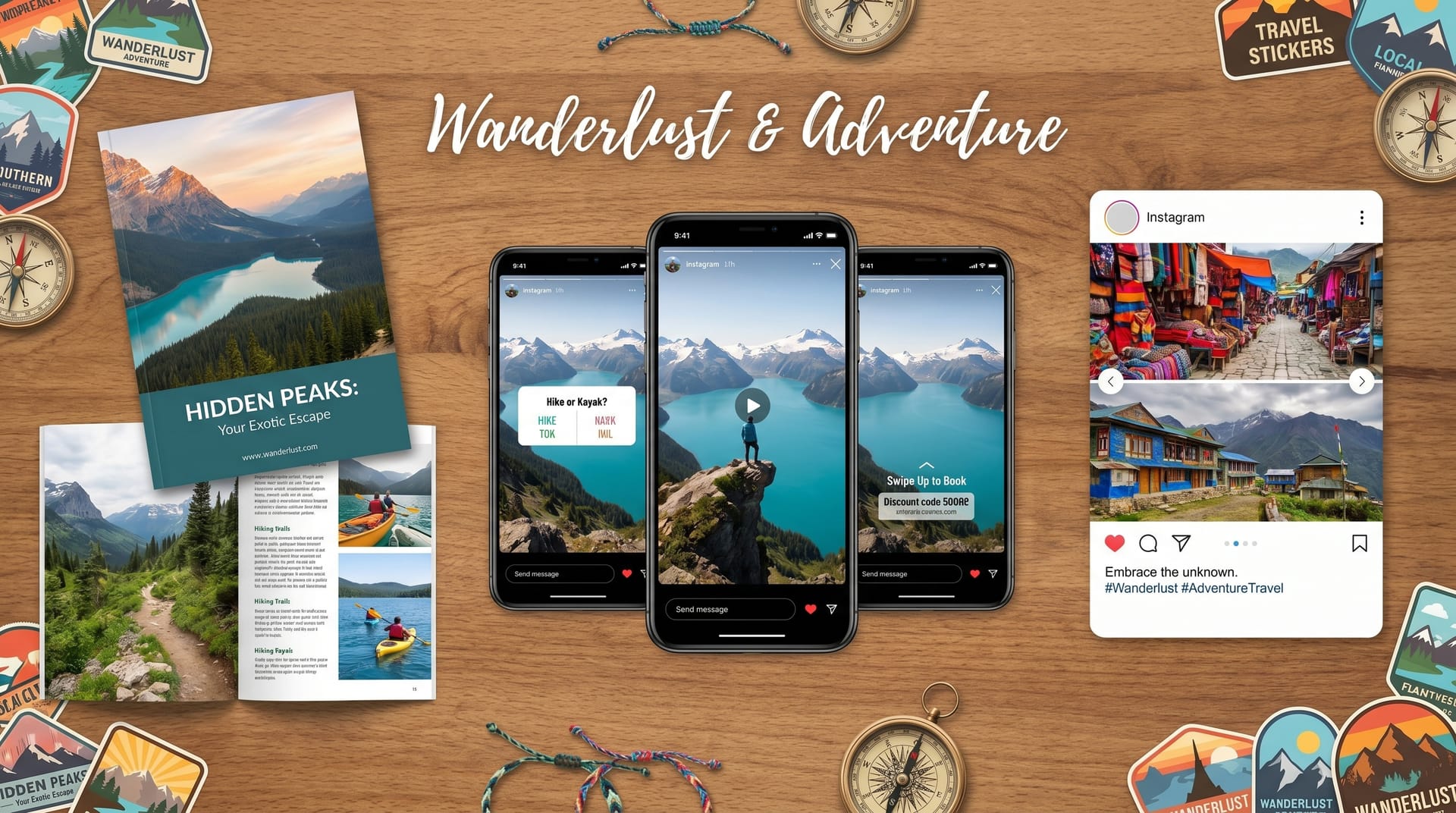 NeoSpark enables DMOs to produce entire seasonal campaign libraries in a single day
4. Real-Time Content Adaptation
Respond to trends and events instantly:
- Weather-responsive content: Generate rainy-day activity posts during unexpected weather
- Event coverage: Create visual recaps of festivals and events within hours
- Trend-jacking: Produce trending-format content while the trend is still relevant
- Crisis communication: Quickly adapt messaging when circumstances change
Getting started with NeoSpark for destination marketing:
- Upload your destination’s best photography as style references
- Define your brand colors, fonts, and visual guidelines
- Create prompt templates for recurring content types
- Generate a month’s worth of social content in a single session
- Use AI upscaling to enhance lower-resolution source images
Try it now: Create your first destination marketing visual with NeoSpark’s AI Image Generator �� no design experience required.
Content Repurposing Framework
Maximize the value of every piece of content by repurposing it across channels and formats.
The Content Repurposing Pyramid
Base: Hero Content (1 piece)
- 10-minute destination documentary video
- Comprehensive 3,000-word destination guide
- Major campaign launch with full creative suite
Middle: Derivative Content (10-15 pieces)
- 5x 60-second social video clips from the documentary
- 3x blog posts extracted from the guide (specific topics)
- 10x social graphics with quotes and stats
- 1x email newsletter featuring the content
- 1x Pinterest board with 20 pins
Top: Micro-Content (30-50 pieces)
- 15x Instagram Stories with video snippets
- 10x TikTok clips with trending audio
- 10x tweet threads with key insights
- 5x LinkedIn posts for B2B audience
- 5x Facebook posts for community groups
Repurposing Workflow
| Step | Action | Tool |
|---|---|---|
| 1 | Create hero content | Camera, writer, or AI generation |
| 2 | Extract key moments/insights | Manual review or AI summarization |
| 3 | Generate platform-specific formats | NeoSpark AI, Canva, or native tools |
| 4 | Adapt copy for each platform | AI rewriting or manual adaptation |
| 5 | Schedule across channels | Buffer, Hootsuite, Later |
| 6 | Monitor performance | Native analytics + Google Analytics |
| 7 | Double down on winners | Boost top performers with paid ads |
Repurposing rules:
- Always optimize for the platform (don’t cross-post identical content)
- Adjust aspect ratios: 1:1 (Instagram feed), 9:16 (Stories/Reels/TikTok), 16:9 (YouTube)
- Rewrite captions for each platform’s culture and best practices
- Update timestamps and references for evergreen content
- Create “greatest hits” compilations quarterly
Measuring Destination Marketing ROI
Proving marketing ROI is essential for DMO budget justification. Here is a comprehensive measurement framework.
KPI Framework by Funnel Stage
| Funnel Stage | Primary KPIs | Measurement Tools | Benchmark |
|---|---|---|---|
| Awareness | Impressions, reach, video views, brand mention volume | Social analytics, Google Search Console, Brandwatch | 20% YoY growth in branded searches |
| Interest | Website traffic, time on site, pages per session, content engagement | Google Analytics 4, Hotjar, Semrush | 3+ pages per session, 2+ min avg duration |
| Consideration | Guide downloads, itinerary saves, email signups, brochure requests | CRM, email platform, PDF analytics | 5-10% visitor-to-lead conversion |
| Intent | Booking engine visits, accommodation searches, package inquiries | Booking platform analytics, CRM | 15-25% lead-to-intent progression |
| Conversion | Bookings, room nights, visitor numbers, revenue attributed | Booking engines, POS, tourism board statistics | 5:1 marketing ROI minimum |
| Advocacy | UGC volume, reviews, NPS, repeat visitation rate | Review platforms, social listening, surveys | 40+ NPS, 20% repeat visitors |
Attribution Models for Destination Marketing
| Model | Best For | Limitations |
|---|---|---|
| Last-click | Simple e-commerce | Undervalues awareness content |
| First-click | Brand building campaigns | Overvalues top-of-funnel |
| Linear | Multi-touch journeys | Lacks nuance |
| Time-decay | Short booking windows | Misses long-term inspiration |
| Data-driven | Mature analytics setup | Requires significant data volume |
| UGC-weighted | Destination marketing | Harder to quantify |
Recommended approach: Use data-driven attribution where possible, but supplement with UGC tracking (branded hashtag volume, mention sentiment) and post-visit surveys asking “How did you hear about us?”
Marketing Efficiency Metrics
Track these efficiency metrics monthly:
- Cost per thousand impressions (CPM): By channel and campaign
- Cost per engagement (CPE): Likes, comments, shares, saves
- Cost per website visit: From paid and organic social
- Cost per lead: Guide download, email signup, inquiry
- Cost per booking: Total marketing spend divided by confirmed bookings
- Content efficiency: Engagement per piece of content by type
- UGC value: Estimated media value of user-generated content
Destination Marketing Case Studies
Case Study 1: Visit Faroe Islands �� “Sheep View 360”
Destination profile: Small North Atlantic archipelago, population 54,000, remote location with limited tourism infrastructure
Challenge: As a remote destination with a small marketing budget, the Faroe Islands struggled to compete with larger, better-funded destinations. Traditional advertising was prohibitively expensive.
Strategy: The DMO created “Sheep View 360” �� attaching 360-degree cameras to sheep to capture the islands’ stunning landscapes from a unique perspective. The campaign combined several strategies from this guide:
- UGC amplification: Encouraged visitors to share their own sheep-view photos
- Viral potential: The quirky concept generated massive media coverage
- 360 virtual tours: The camera footage became immersive online experiences
- Influencer partnerships: Invited travel photographers and videographers to experience Sheep View
Results:
- Media coverage in 150+ countries (estimated $50M+ in earned media)
- Tourism growth: +15% visitor increase in campaign year
- Social media following: +400% across platforms
- Website traffic: +300% during campaign period
- Cost per impression: Effectively zero (organic viral spread)
Key lesson: Creativity and uniqueness beat budget. A small destination with a brilliant, shareable concept can outperform massive marketing spends.
Case Study 2: Tourism Australia �� “Dundee” Super Bowl Campaign
Destination profile: Major tourism board with significant marketing budget, targeting the lucrative US market
Challenge: Breaking through the clutter of destination advertising in the highly competitive US market. Australia was perceived as “too far” and “too expensive” by many American travelers.
Strategy: Tourism Australia created a hoax movie trailer for a “Crocodile Dundee” reboot starring Chris Hemsworth and Danny McBride, which aired during the Super Bowl. The campaign included:
- Influencer partnerships: Major Hollywood stars as campaign faces
- Multi-channel distribution: Super Bowl ad, social media, PR, and follow-up content
- Content repurposing: The trailer was cut into dozens of social clips
- AI-powered targeting: Precision audience targeting for follow-up digital campaigns
Results:
- Super Bowl ad reach: 103 million viewers
- Social media engagement: 1.2 billion impressions
- Website traffic: +30% increase from US market
- Bookings inquiry increase: +20% from US travelers
- ROI: Estimated $6 return for every $1 spent
Key lesson: Integrated campaigns that combine mass-reach moments (Super Bowl) with sustained digital engagement deliver the highest ROI. The initial awareness spike must be followed by targeted nurturing content.
FAQ
Q: What is the most cost-effective travel destination marketing idea for small DMOs?
A: User-generated content campaigns deliver the highest ROI for small budgets. By creating a branded hashtag, encouraging visitor sharing, and regularly featuring UGC on your channels, you can generate thousands of authentic content pieces without production costs. Combine this with strategic micro-influencer partnerships (10-20 influencers with 10K-50K followers) for amplified reach at manageable costs.
Q: How can DMOs measure the direct impact of social media on actual visitation?
A: Use a multi-layered attribution approach: (1) Post-visit surveys asking “How did you first hear about us?” (2) UTM tracking on all social links to measure website traffic and booking inquiries (3) Branded search volume trends as a proxy for awareness impact (4) Correlation analysis between social engagement spikes and booking patterns (5) Unique promo codes for social followers to track direct conversions.
Q: What role does AI play in modern destination marketing?
A: AI serves three critical functions: (1) Content creation at scale �� generating hundreds of visual assets, translations, and copy variations in hours instead of weeks; (2) Personalization �� delivering tailored content recommendations based on traveler interests and behavior; (3) Optimization �� analyzing performance data to predict which content types, channels, and messages will perform best. Tools like NeoSpark specifically help DMOs create professional marketing visuals without design teams.
Q: How often should a destination post on social media?
A: The optimal frequency varies by platform: Instagram (1-2 feed posts + 3-5 Stories daily), TikTok (1-3 posts daily for growth), Facebook (1 post daily + active group engagement), Pinterest (5-10 pins daily), Twitter/X (3-5 posts daily), LinkedIn (3-5 posts weekly for B2B). Quality matters more than quantity �� it is better to post exceptional content 5x weekly than mediocre content 15x weekly. Use AI tools to maintain quality at higher volumes.
Q: What are the biggest mistakes DMOs make with influencer partnerships?
A: The five most common mistakes: (1) Focusing on follower count over engagement rate �� a 50K influencer with 8% engagement outperforms a 500K influencer with 1% engagement; (2) Over-scripting content �� audiences detect inauthenticity; provide guidelines but allow creative freedom; (3) One-off posts instead of campaigns �� sustained partnerships build credibility; (4) Ignoring micro and nano influencers �� they often deliver better ROI; (5) Not amplifying top content with paid ads �� extend the life of great influencer content through paid promotion.
Q: How can destinations compete with larger, better-funded competitors?
A: Smaller destinations should focus on differentiation rather than comparison. Strategies include: (1) Niche positioning �� own a specific category (e.g., “best stargazing destination” rather than “great vacation spot”); (2) Authenticity �� lean into genuine local culture rather than polished mass-market appeal; (3) Community building �� create passionate ambassador communities who advocate organically; (4) Agile content �� use AI tools to produce more content faster than larger, slower organizations; (5) Unique experiences �� develop one-of-a-kind activities that generate organic sharing.
Q: What is the ideal marketing budget allocation for a DMO in 2026?
A: A modern DMO budget should follow approximately: 30% content creation (visuals, video, copy), 25% paid digital advertising (social, search, programmatic), 20% influencer and partnership programs, 15% technology and tools (AI platforms, CRM, analytics), 10% events and activations. Adjust based on your destination’s maturity �� newer destinations should invest more in awareness (content + paid), while established destinations can shift toward retention and advocacy.
Conclusion
Destination marketing in 2026 is a visual-first, AI-powered, community-driven discipline. The DMOs and tourism boards that thrive will be those that embrace new technologies while maintaining the authentic human connections that make travel meaningful.
Key takeaways:
- Visual content is the new currency: 76% of travelers discover destinations through social media �� your visuals must be exceptional and shareable
- UGC outperforms brand content: Invest in campaigns that turn visitors into content creators and brand advocates
- AI reduces creative costs by 90%+: Tools like NeoSpark enable small teams to produce agency-quality content at scale
- Seasonal planning ensures year-round relevance: A structured 12-month campaign calendar prevents dead periods and maintains momentum
- Multi-channel coordination multiplies impact: One hero content piece should spawn 50+ derivative assets across channels
- Measure what matters: Focus on attribution from awareness through booking, not just vanity metrics
The destinations that master these strategies will not just attract more visitors �� they will build passionate communities of advocates who market the destination organically, sustainably, and authentically.
Ready to transform your destination marketing? Start creating stunning visual content at scale with NeoSpark’s AI Design Tools �� designed for marketers who need professional results without professional design teams.
Related Resources:
- AI Design Tools �� Full suite of AI content creation tools for destination marketers
- Social Media Post Generator �� Create platform-optimized travel content
- Advertising Poster Generator �� Design campaign visuals for tourism promotions
- AI Content Creation Complete Guide �� Master AI-powered content workflows
- AI Marketing Content Guide �� Strategic approaches to AI in marketing
- How to Create AI Event Posters �� Design event promotions for festivals and tourism events
Author: Alex Zhang, Founder of NeoSpark Platform Last Updated: May 7, 2026 Sources: World Tourism Organization (UNWTO) 2025 Report, Expedia Group Travel Trends 2025, Skift State of Travel 2026, Stackla Consumer Content Report, NeoSpark Tourism Marketing Survey 2026, Tourism Australia Annual Report 2024, Visit Faroe Islands Case Study