Embroidered 3D Isometric Cityscape Textile Art
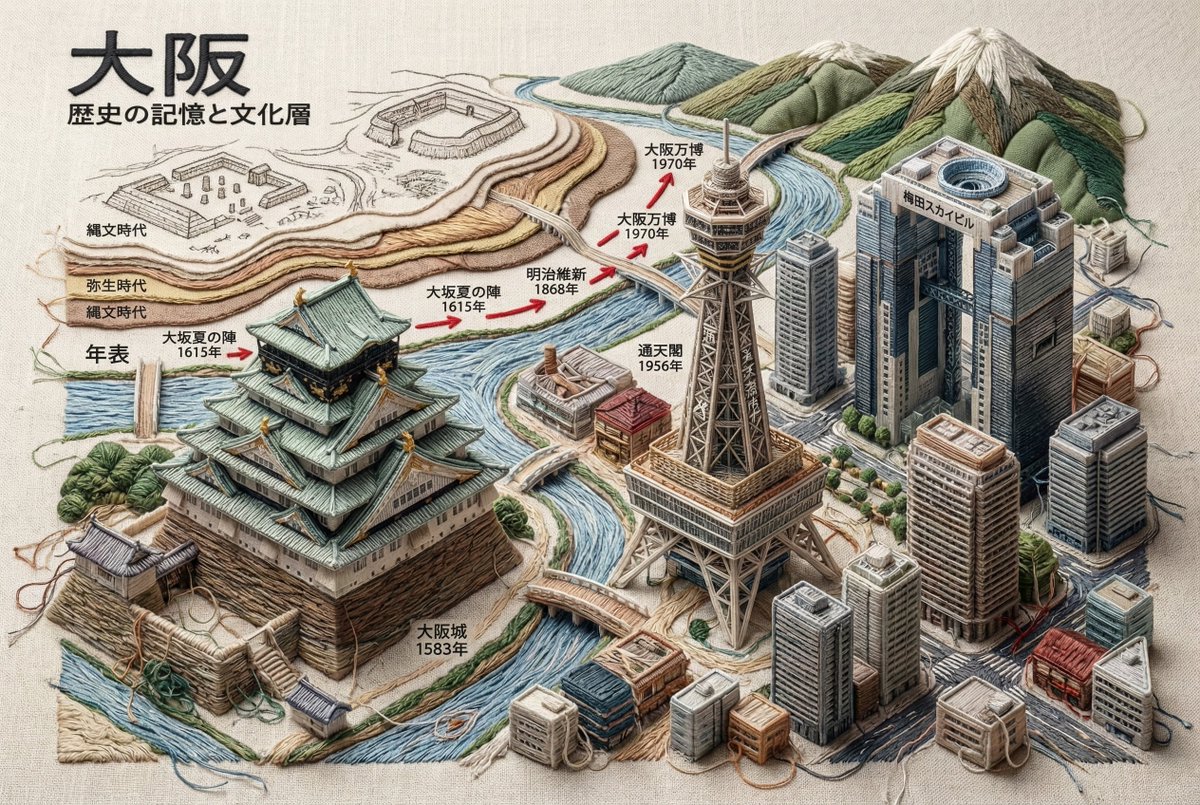
An extremely detailed, highly constrained image generation prompt for Nano Banana Pro to create a hyper-realistic 3D isometric cityscape entirely constructed from textile art, specifically embroidery and weaving. The prompt strictly prohibits non-textile materials (stone, metal, wood) and enforces rules for visible thread ends, hand-made authenticity, and Japanese text labels for historical and geographical elements. The user must input the name of the city to be depicted.

Generated result using this prompt
The Prompt
Ultra-realistic 3D Isometric Cityscape Embroidery - Complete Textile Art

^^^^^^^^^^^^^^^^^^

A textile masterpiece depicting the historical memory, cultural layers, architectural evolution, and current identity of **{argument name="city name" default="[Enter City Name]"}**, where all architectural structures are entirely constructed using embroidery and weaving techniques. The entire scene exists on a base of linen or raw canvas fabric.

🚫 Absolute Material Rules (Important)

❌ Forbidden Materials:

Stone, concrete, metal, glass, wood, plastic
✅ Allowed Materials:

Embroidery thread, bundles of thread, fabric folds, textile padding, layered stitching, knots, seams, weaving textures only
Core Concept - Architecture as Textile Sculpture

Architecture is interpreted as sculptural embroidery. Volume is created by:

Extreme relief embroidery (high-relief stumpwork)

Vertically stacking thick bundles of thread

Multiple overlapping stitch directions
Soft padded fabric cores completely wrapped in thread
⚠️ Structure must appear physically sewn, not modeled.
Thread Density and Hand-Made Imperfection - Mandatory

All architectural forms must have densely layered thread and heavy-looking seams.

✅ Structures should look:

Over-embroidered

Carefully crafted stitch by stitch

Slightly imperfect
Hand-made
Edges and Thread Behavior - Mandatory
All buildings, monuments, and woven structures must include the following elements:
✅ Mandatory Elements:

Visible frayed thread ends

Frayed embroidery edges

Microscopic thread fibers extending from seams

Slightly undone stitch tips at corners
Edge Characteristics:
Soft, sewn, fiber-based feel
Organic, sewn contours with hanging threads
Tactile edges

❌ Forbidden:
Sharp edges
Perfect contours
Clean 3D shapes

⚠️ Important: Buildings must never give a rigid impression. All corners are:
Separated by stitching
Softened by overlapping thread
Slightly rounded by fabric tension

Thread knots, stitch junctions, and small thread ends are visible
Handmade Authenticity Rule
The entire scene must feel:
Handmade
Tactile

Created in a textile atelier

✅ Acceptable Features:

Slight variations in stitch tension
Differences in thread thickness
Subtle unevenness in placement
❌ Forbidden: Perfect symmetry

Embroidery Content Section (Mandatory)
1. City Identity and Geographical Location
City name in thread embroidery
Geographical location via stitched map contours

Strategic importance as a stitched annotation

Trade routes via thread flow

Embroidered compass and edge annotations

2. Iconic Buildings and Construction Dates
Name, construction year, civilization, function
Flat contour stitching with adjacent embroidered date tags
Layered, 3D embroidered architectural forms completely constructed with thread
3. Historical Layers and Ancient Civilizations
Example: Ancient, Medieval, Early Modern, Modern

Delicate sketch embroidery
Semi-relief remnants
Layered textile forms
4. Major Events and Important Dates - Chronology

Founding, wars, disasters, reconstruction, modernization, etc.
Timeline embroidered with thread
Stitch direction arrows
Major dates in red thread
5. Current City - Complete 3D Embroidery Only

Bridges, towers, silhouettes
Modern architecture
Visual Continuity Rule - Absolute
✅ Mandatory: All thread flow must seamlessly connect structures, dates, symbols, and the modern cityscape.
⚠️ Important: The city must appear as a single, continuous piece of embroidered fabric.

Lighting and Technical Specifications
Lighting:
Soft atelier lighting

Side light highlighting raised embroidery

Realistic textile shadows

Technical Specifications:

8K resolution

Cinematic depth of field

Unreal Engine 5 rendering

Museum-quality textile realism
Ultra-detailed thread texture
Text Language Rule - Mandatory
All text elements displayed in the generated image must be written in Japanese.

Target Text:
City name
Historical periods and civilizations
Building names and construction dates
Cultural annotations and symbolic meanings
Map annotations and geographical descriptions

Chronology events and stitched labels

Museum-style annotations and sketch annotations

❌ Forbidden: English, foreign languages, or mixed-language text ✅ Mandatory: Only correct, legible, and context-appropriate Japanese embroidered text

Visibility Rule for Textile Base - Absolute (Important)
The embroidery must be unmistakably stitched onto a visible fabric surface.
Mandatory features of the underlying fabric:
Linen, raw cotton, or coarse canvas
Visible fabric weave (warp and weft clearly identifiable)
Natural fabric slubs, fiber irregularities, and fabric tension
Slight fabric wrinkles, folds, and creases caused by stitching
🚫 Forbidden:

Floating embroidery
Digital relief

Sculpted objects

✅ Mandatory:

All stitches, structures, and thread masses are visibly fixed to the fabric surface

Pulled through and penetrating the fabric surface
Mandatory Fabric Interaction Details
The fabric surface slightly warps due to stitch tension
Pulling the thread creates subtle depressions and raised areas
Needle entry and exit points are implied by stitch behavior

The fabric texture remains visible between dense embroidery areas
Excess Thread and Thread End Rule - Absolute (Important)
All three-dimensional embroidered elements must show visible thread excess and unfinished thread behavior.
Mandatory for all 3D objects (buildings, monuments, bridges, towers, terrain, symbols, relief text elements):

✅ Mandatory Features:
Loose thread ends protruding from the surface
Excess thread ends coming out of stitch junctions

Small loops and overlaps of thread that are not fully tightened

Slightly tangled or overlapping clumps of thread at corners and stress points

Occasional hanging thread tips casting soft textile shadows
🚫 Forbidden:
Neatly finished embroidery
Hidden or perfectly trimmed thread ends

Machine-perfect finished stitches

Smooth, sealed, or sculpted surfaces

Enforcement of Craft Authenticity

Thread ends must look:

Handmade
In progress
The work of a craftsman finishing a textile piece
✅ Acceptable Features:
Thread ends with slightly uneven length, direction, or tension
Rendering Keywords

Ultra-high density embroidery, overstitched textile structures, visible loose threads, frayed stitch ends, hand-sewn 3D textile structures, tactile fiber realism, stitched volume (not shape), thread-composed shapes
Note: This guideline is a strict standard for creating museum-quality artwork composed entirely of textiles. All rules are absolute, with no exceptions.
About This Prompt
An extremely detailed, highly constrained image generation prompt for Nano Banana Pro to create a hyper-realistic 3D isometric cityscape entirely constructed from textile art, specifically embroidery and weaving. The prompt strictly prohibits non-textile materials (stone, metal, wood) and enforces rules for visible thread ends, hand-made authenticity, and Japanese text labels for historical and geographical elements. The user must input the name of the city to be depicted.
Prompt Details
ID: 5488
Requires Reference Images: No
Sample Images
Full Prompt
Ultra-realistic 3D Isometric Cityscape Embroidery - Complete Textile Art
^^^^^^^^^^^^^^^^^^
A textile masterpiece depicting the historical memory, cultural layers, architectural evolution, and current identity of **{argument name="city name" default="[Enter City Name]"}**, where all architectural structures are entirely constructed using embroidery and weaving techniques. The entire scene exists on a base of linen or raw canvas fabric.
🚫 Absolute Material Rules (Important)
❌ Forbidden Materials:
Stone, concrete, metal, glass, wood, plastic
✅ Allowed Materials:
Embroidery thread, bundles of thread, fabric folds, textile padding, layered stitching, knots, seams, weaving textures only
Core Concept - Architecture as Textile Sculpture
Architecture is interpreted as sculptural embroidery. Volume is created by:
Extreme relief embroidery (high-relief stumpwork)
Vertically stacking thick bundles of thread
Multiple overlapping stitch directions
Soft padded fabric cores completely wrapped in thread
⚠️ Structure must appear physically sewn, not modeled.
Thread Density and Hand-Made Imperfection - Mandatory
All architectural forms must have densely layered thread and heavy-looking seams.
✅ Structures should look:
Over-embroidered
Carefully crafted stitch by stitch
Slightly imperfect
Hand-made
Edges and Thread Behavior - Mandatory
All buildings, monuments, and woven structures must include the following elements:
✅ Mandatory Elements:
Visible frayed thread ends
Frayed embroidery edges
Microscopic thread fibers extending from seams
Slightly undone stitch tips at corners
Edge Characteristics:
Soft, sewn, fiber-based feel
Organic, sewn contours with hanging threads
Tactile edges
❌ Forbidden:
Sharp edges
Perfect contours
Clean 3D shapes
⚠️ Important: Buildings must never give a rigid impression. All corners are:
Separated by stitching
Softened by overlapping thread
Slightly rounded by fabric tension
Thread knots, stitch junctions, and small thread ends are visible
Handmade Authenticity Rule
The entire scene must feel:
Handmade
Tactile
Created in a textile atelier
✅ Acceptable Features:
Slight variations in stitch tension
Differences in thread thickness
Subtle unevenness in placement
❌ Forbidden: Perfect symmetry
Embroidery Content Section (Mandatory)
1. City Identity and Geographical Location
City name in thread embroidery
Geographical location via stitched map contours
Strategic importance as a stitched annotation
Trade routes via thread flow
Embroidered compass and edge annotations
2. Iconic Buildings and Construction Dates
Name, construction year, civilization, function
Flat contour stitching with adjacent embroidered date tags
Layered, 3D embroidered architectural forms completely constructed with thread
3. Historical Layers and Ancient Civilizations
Example: Ancient, Medieval, Early Modern, Modern
Delicate sketch embroidery
Semi-relief remnants
Layered textile forms
4. Major Events and Important Dates - Chronology
Founding, wars, disasters, reconstruction, modernization, etc.
Timeline embroidered with thread
Stitch direction arrows
Major dates in red thread
5. Current City - Complete 3D Embroidery Only
Bridges, towers, silhouettes
Modern architecture
Visual Continuity Rule - Absolute
✅ Mandatory: All thread flow must seamlessly connect structures, dates, symbols, and the modern cityscape.
⚠️ Important: The city must appear as a single, continuous piece of embroidered fabric.
Lighting and Technical Specifications
Lighting:
Soft atelier lighting
Side light highlighting raised embroidery
Realistic textile shadows
Technical Specifications:
8K resolution
Cinematic depth of field
Unreal Engine 5 rendering
Museum-quality textile realism
Ultra-detailed thread texture
Text Language Rule - Mandatory
All text elements displayed in the generated image must be written in Japanese.
Target Text:
City name
Historical periods and civilizations
Building names and construction dates
Cultural annotations and symbolic meanings
Map annotations and geographical descriptions
Chronology events and stitched labels
Museum-style annotations and sketch annotations
❌ Forbidden: English, foreign languages, or mixed-language text ✅ Mandatory: Only correct, legible, and context-appropriate Japanese embroidered text
Visibility Rule for Textile Base - Absolute (Important)
The embroidery must be unmistakably stitched onto a visible fabric surface.
Mandatory features of the underlying fabric:
Linen, raw cotton, or coarse canvas
Visible fabric weave (warp and weft clearly identifiable)
Natural fabric slubs, fiber irregularities, and fabric tension
Slight fabric wrinkles, folds, and creases caused by stitching
🚫 Forbidden:
Floating embroidery
Digital relief
Sculpted objects
✅ Mandatory:
All stitches, structures, and thread masses are visibly fixed to the fabric surface
Pulled through and penetrating the fabric surface
Mandatory Fabric Interaction Details
The fabric surface slightly warps due to stitch tension
Pulling the thread creates subtle depressions and raised areas
Needle entry and exit points are implied by stitch behavior
The fabric texture remains visible between dense embroidery areas
Excess Thread and Thread End Rule - Absolute (Important)
All three-dimensional embroidered elements must show visible thread excess and unfinished thread behavior.
Mandatory for all 3D objects (buildings, monuments, bridges, towers, terrain, symbols, relief text elements):
✅ Mandatory Features:
Loose thread ends protruding from the surface
Excess thread ends coming out of stitch junctions
Small loops and overlaps of thread that are not fully tightened
Slightly tangled or overlapping clumps of thread at corners and stress points
Occasional hanging thread tips casting soft textile shadows
🚫 Forbidden:
Neatly finished embroidery
Hidden or perfectly trimmed thread ends
Machine-perfect finished stitches
Smooth, sealed, or sculpted surfaces
Enforcement of Craft Authenticity
Thread ends must look:
Handmade
In progress
The work of a craftsman finishing a textile piece
✅ Acceptable Features:
Thread ends with slightly uneven length, direction, or tension
Rendering Keywords
Ultra-high density embroidery, overstitched textile structures, visible loose threads, frayed stitch ends, hand-sewn 3D textile structures, tactile fiber realism, stitched volume (not shape), thread-composed shapes
Note: This guideline is a strict standard for creating museum-quality artwork composed entirely of textiles. All rules are absolute, with no exceptions.
Share This Prompt
Prompt Info
Tags
Daily Prompt Updates
New prompts are automatically curated daily from top AI creators on X.