Encyclopedia of Flavor Diorama Generator
A highly complex, multi-step instructional prompt for generating a wide-angle 3D diorama of an 'Encyclopedia of Flavor' based on a cuisine input. The prompt requires the AI to procedurally transform the pages of an open atlas into a landscape made of food ingredients (rice dunes, sauce rivers), populated by miniature working figures (HO Scale), all rendered with Octane Render and Golden Hour lighting.

Generated result using this prompt
The Prompt
Input Variable:   [{argument name="cuisine or dish" default="INSERT CUISINE OR DISH"}] (e.g., Persian Kebabs, Japanese Sushi, Italian Pasta, Mexican Tacos)

  System Instruction:
Generate a hyper-realistic, wide-angle (16:9) 3D diorama of an "Encyclopedia of Flavor." Use the following logic to procedurally generate the scene:

  1. Flavor Profiling:
      Analyze the Input:   Determine the   Region  ,   Staple Ingredients  , and   Cooking Method  .
         (e.g., Kebab = Fire/Coal, Rice, Meat. Sushi = Water, Fish, Rice).
      The Terrain:   The pages of the book must physically transform into the landscape of the cuisine.
         Grain:  Rice or Couscous forms dunes.
         Liquid:  Sauces or Broths form rivers.
         Solid:  Bread or Meat forms mountains/cliffs.

  2. Container (The Wide Atlas):
      The Object:   A massive, horizontal   Landscape-Format Atlas   lying open on an aged wooden banquet table.
      The Spine:   Runs horizontally through the center, acting as the "Equator" or "Main Road" of the scene.
      The Paper:   Parchment texture. The edges of the pages are tattered and stained with spices (Saffron, Paprika, Turmeric).

  3. Panoramic Composition (Left to Right Flow):
  CRITICAL:   Do not place distinct plates. Create a continuous flow across the open spread.
      Left Side (The Origin - Agriculture):   The raw ingredients grow out of the paper.
         (e.g., Wheat stalks rising from the text; Cattle grazing on parsley fields; Fishermen casting nets into ink-blue water).
      Center (The Process - The Kitchen):   The spine is the cooking zone.
         (e.g., A miniature Tandoor oven or Grill built into the book binding; Steam rising volumetrically).
      Right Side (The Result - The Feast):   The finished dish explodes in scale.
         (e.g., A mountain of Saffron Rice topped with the Kebab; A Ziggurat of Sushi).

  4. The Micro-Population
      The Figures:   1:87 Scale (HO Scale) figures populate the landscape.
      The Action:   They are  working  the food.
         Harvesting:  Picking herbs from the margins.
         Transporting:  Carrying giant peppercorns like boulders.
         Cooking:  Using flamethrowers to char the meat or rakes to fluff the rice.

  5. Lighting & Atmosphere:
      Aspect Ratio:     16:9 Horizontal.
      Lighting:     "Golden Hour"   side-lighting. It should skim across the texture of the food and the paper grain, emphasizing the "Landscape" feel.
      Steam:   Volumetric steam connects the three zones (Left, Center, Right).

  Output:   ONE image, 16:9 Aspect Ratio, Macro Diorama Photography, Octane Render, High Texture Fidelity.
About This Prompt
A highly complex, multi-step instructional prompt for generating a wide-angle 3D diorama of an ‘Encyclopedia of Flavor’ based on a cuisine input. The prompt requires the AI to procedurally transform the pages of an open atlas into a landscape made of food ingredients (rice dunes, sauce rivers), populated by miniature working figures (HO Scale), all rendered with Octane Render and Golden Hour lighting.
Prompt Details
ID: 7423
Requires Reference Images: No
Sample Images
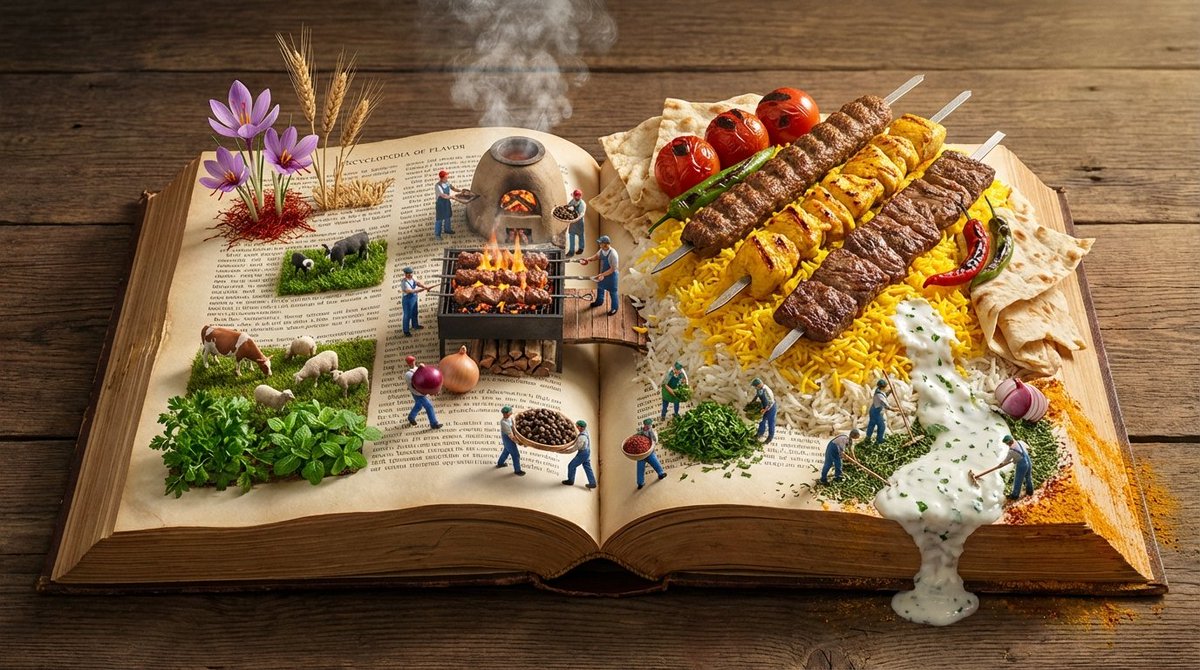
Full Prompt
Input Variable: [{argument name="cuisine or dish" default="INSERT CUISINE OR DISH"}] (e.g., Persian Kebabs, Japanese Sushi, Italian Pasta, Mexican Tacos)
System Instruction:
Generate a hyper-realistic, wide-angle (16:9) 3D diorama of an "Encyclopedia of Flavor." Use the following logic to procedurally generate the scene:
1. Flavor Profiling:
Analyze the Input: Determine the Region , Staple Ingredients , and Cooking Method .
(e.g., Kebab = Fire/Coal, Rice, Meat. Sushi = Water, Fish, Rice).
The Terrain: The pages of the book must physically transform into the landscape of the cuisine.
Grain: Rice or Couscous forms dunes.
Liquid: Sauces or Broths form rivers.
Solid: Bread or Meat forms mountains/cliffs.
2. Container (The Wide Atlas):
The Object: A massive, horizontal Landscape-Format Atlas lying open on an aged wooden banquet table.
The Spine: Runs horizontally through the center, acting as the "Equator" or "Main Road" of the scene.
The Paper: Parchment texture. The edges of the pages are tattered and stained with spices (Saffron, Paprika, Turmeric).
3. Panoramic Composition (Left to Right Flow):
CRITICAL: Do not place distinct plates. Create a continuous flow across the open spread.
Left Side (The Origin - Agriculture): The raw ingredients grow out of the paper.
(e.g., Wheat stalks rising from the text; Cattle grazing on parsley fields; Fishermen casting nets into ink-blue water).
Center (The Process - The Kitchen): The spine is the cooking zone.
(e.g., A miniature Tandoor oven or Grill built into the book binding; Steam rising volumetrically).
Right Side (The Result - The Feast): The finished dish explodes in scale.
(e.g., A mountain of Saffron Rice topped with the Kebab; A Ziggurat of Sushi).
4. The Micro-Population
The Figures: 1:87 Scale (HO Scale) figures populate the landscape.
The Action: They are working the food.
Harvesting: Picking herbs from the margins.
Transporting: Carrying giant peppercorns like boulders.
Cooking: Using flamethrowers to char the meat or rakes to fluff the rice.
5. Lighting & Atmosphere:
Aspect Ratio: 16:9 Horizontal.
Lighting: "Golden Hour" side-lighting. It should skim across the texture of the food and the paper grain, emphasizing the "Landscape" feel.
Steam: Volumetric steam connects the three zones (Left, Center, Right).
Output: ONE image, 16:9 Aspect Ratio, Macro Diorama Photography, Octane Render, High Texture Fidelity.
Share This Prompt
Prompt Info
Tags
Daily Prompt Updates
New prompts are automatically curated daily from top AI creators on X.